Description
The Studio Training | Free Online Education
UK Aesthetics Regulations 2026: Licensing, Qualifications and Clinical Governance
100% FREE ONLINE COURSEUnderstand the latest UK aesthetics regulations, government proposals, licensing developments and professional standards with our free online aesthetics regulation course.
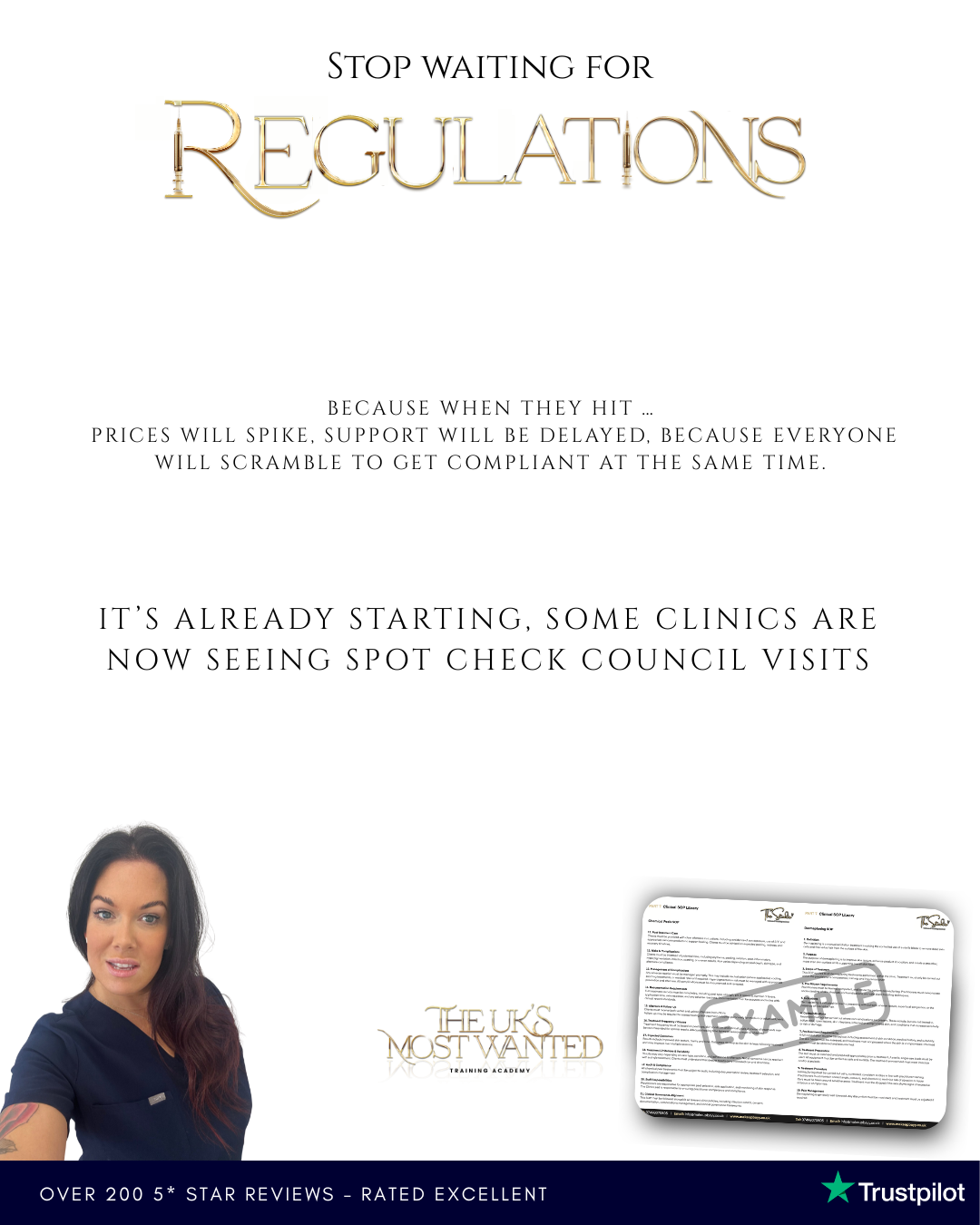
The aesthetics industry is facing significant regulatory developments. With new government announcements, consultations and changing expectations, it can be difficult for practitioners to separate confirmed legal requirements from proposed future restrictions.
At The Studio Training, we believe practitioners should have access to clear, reliable information without having to pay simply to understand what is happening in their industry.
That is why we have created this free educational course, bringing together official legislation, government publications and practical guidance in one accessible learning resource.
Education Should Be Accessible
Whether you are an experienced aesthetics practitioner, clinic owner, educator or considering a career in aesthetics, this course is designed to help you understand the regulatory landscape.
No course fee. No unnecessary jargon. Clear information supported by official sources.
Latest Regulatory Developments
What Is Happening with UK Aesthetics Regulations?
The UK does not currently operate one single licensing scheme covering all non-surgical aesthetic procedures.
England, Scotland, Wales and Northern Ireland have different legal frameworks and are at different stages of regulatory development.
England: New 2026 Proposals
On 21 October 2026, the government published a consultation proposing new restrictions for specified high-risk cosmetic and wellbeing procedures.
The proposals include certain intravenous treatments, blood-based procedures, deep chemical peels and other high-risk treatments.
These proposals are not yet final law.
Scotland: 2026 Legislation
Scotland's Non-surgical Procedures and Functions of Medical Reviewers (Scotland) Act 2026 received Royal Assent in May 2026.
Important operational requirements remain subject to phased implementation.
Wales: Licensing Already Live
Wales has operated mandatory licensing for defined special procedures since November 2024.
These include acupuncture, body piercing, electrolysis and tattooing, including relevant semi-permanent makeup.
Northern Ireland
Existing medicines, healthcare, professional and safety legislation continues to apply.
There is no equivalent general national aesthetics licensing scheme currently operating across all non-surgical treatments.
Why Accuracy Matters
A consultation is not the same as enacted law. A regulated qualification is not automatically a licence to practise.
Our course explains these distinctions so practitioners can make informed decisions based on current requirements, not industry rumours.
Course Content
What Will You Learn?
This free UK aesthetics regulation course covers the key subjects practitioners need to understand.
History of Aesthetics Regulation
Explore how regulation has developed, including the Keogh Review, education frameworks and more recent government reforms.
CPD vs Regulated Qualifications
Understand the difference between CPD certificates, Ofqual-regulated qualifications, assessed competence and legal eligibility.
England Aesthetics Licensing
Learn about Section 180 of the Health and Care Act 2022, the proposed licensing framework and the October 2026 high-risk consultation.
Scotland Aesthetics Regulation
Understand Scotland's 2026 legislation, professional restrictions, premises requirements and phased implementation.
Wales Special Procedures Licensing
Explore the mandatory licensing system for defined special procedures, including practitioner licences and premises approval.
What We Know to Date
Compare the different regulatory positions across the UK and identify which developments are already law.
Licensing and Business Preparation
Understand how licensing may affect practitioners, treatment environments, qualifications and professional responsibilities.
Clinical Governance
Review SOPs, risk assessments, infection control, consent, complication management, record keeping and professional accountability.
Important October 2026 Update
What Do the New England Aesthetics Proposals Mean?
The Department of Health and Social Care has proposed restricting specified high-risk cosmetic and wellbeing procedures to certain regulated healthcare professionals.
The proposals could have significant implications for practitioners offering treatments such as IV therapy, PRP, deep chemical peels and other procedures included within the consultation.
The consultation closes on 13 January 2027.
Are These Restrictions Already in Force?
No. As of 22 October 2026, the proposed restrictions remain subject to consultation and further legislative steps.
Practitioners should understand the proposals and continue complying with existing law.
Our free course helps practitioners understand the published proposals, the potential implications for training and professional eligibility, and the importance of following official government updates.
Read the Official October 2026 Government ConsultationWho Can Enrol?
Who Is This Free Course For?
Aesthetics Practitioners
Understand developments that may affect your treatments, qualifications and professional practice.
Clinic and Salon Owners
Learn about premises standards, governance, risk management and business preparation.
Aesthetics Educators
Access an overview of regulatory developments to support accurate discussions with learners.
New and Aspiring Practitioners
Understand the difference between training, qualifications, competence and legal eligibility before choosing a pathway.
You do not need to be an existing student of The Studio Training to enrol.
Our Commitment to Education
Why Are We Offering This Course for Free?
At The Studio Training, we work within the aesthetics education sector and recognise the uncertainty that regulatory changes can create for practitioners.
Many professionals have invested considerable time, money and effort into developing their skills and qualifications.
We believe access to reliable information should not create another financial barrier.
Our aim is to support informed decisions, promote professional standards and encourage safer aesthetic practice.
Helping Practitioners Understand Their Industry
This resource is free because we want practitioners to have access to educational guidance and official sources.
Our role is to support learning, encourage informed discussion and help practitioners understand their responsibilities.
About The Studio Training
Education, Qualifications and Professional Development
The Studio Training is a QUALIFI Approved Centre providing regulated qualifications and professional education within aesthetics and the wider training sector.
Alongside our free educational resources, we offer structured qualification pathways and practical training designed to support knowledge, assessment and professional development.
We encourage practitioners to understand the relationship between education, competence, professional scope and the law.
Our regulated qualification pathways include options across Levels 3 to 7, subject to individual entry requirements and course availability.
Explore Our Regulated QualificationsImportant Qualification Information
Completing a qualification does not automatically provide legal eligibility for every aesthetic procedure or guarantee eligibility under future licensing requirements.
Frequently Asked Questions
UK Aesthetics Regulation FAQs
Is this UK aesthetics regulation course free?
Yes. The course is free to enrol in and access online. It has been created to make regulatory education more accessible to practitioners.
Are new aesthetics regulations coming into force in England in 2026?
England has existing legal requirements and statutory licensing powers, but its wider new licensing scheme has not yet been fully implemented.
The government published further high-risk procedure proposals on 21 October 2026. These are subject to consultation and are not yet final law.
Will CPD certificates still be recognised?
CPD remains relevant to continuing professional development, but a CPD certificate does not automatically satisfy a statutory qualification requirement or establish legal eligibility to perform a treatment.
Will I need a Level 4, 5, 6 or 7 qualification?
There is no single UK-wide rule requiring every aesthetics practitioner to complete Levels 4 through 7.
The applicable requirements depend on the procedure, jurisdiction and any relevant professional or licensing restrictions.
Does this course explain IV therapy regulation?
Yes. The course discusses England's October 2026 proposals concerning specified intravenous and other high-risk procedures.
It explains the difference between consultation proposals and current legal requirements.
Is aesthetics licensing already mandatory in Wales?
Yes, for the four defined special procedures: acupuncture, body piercing, electrolysis and tattooing.
This does not automatically include every aesthetic treatment.
Can I complete the course online?
Yes. The course is delivered online and can be studied at your own pace.
Does this course provide a licence to practise?
No. This is an educational resource designed to explain regulation and professional responsibilities.
It does not provide a statutory licence, professional registration or legal authorisation to perform treatments.
Free Online Learning
Stay Informed. Understand the Changes.
You do not need to navigate aesthetics regulation through rumours, conflicting social media posts or expensive courses.
Access our free UK Aesthetics Regulation, Licensing and Clinical Governance course and develop a clearer understanding of the current position.
Free enrolment. Online learning. Official references.
Use the enrolment option on this page to begin learning.
Official Sources
Government Legislation and Guidance
The course draws on published legislation, government consultation documents and professional standards.
Health and Care Act 2022, Section 180 England: Licensing Consultation Response England: High-Risk Procedures Consultation 2026 Scotland: Non-surgical Procedures Act 2026 Wales: Special Procedures Licensing Scheme Health and Safety ExecutiveInformation reviewed 22 October 2026. This course is provided for educational purposes and does not replace legal, regulatory or professional advice. Government proposals and requirements may change.